


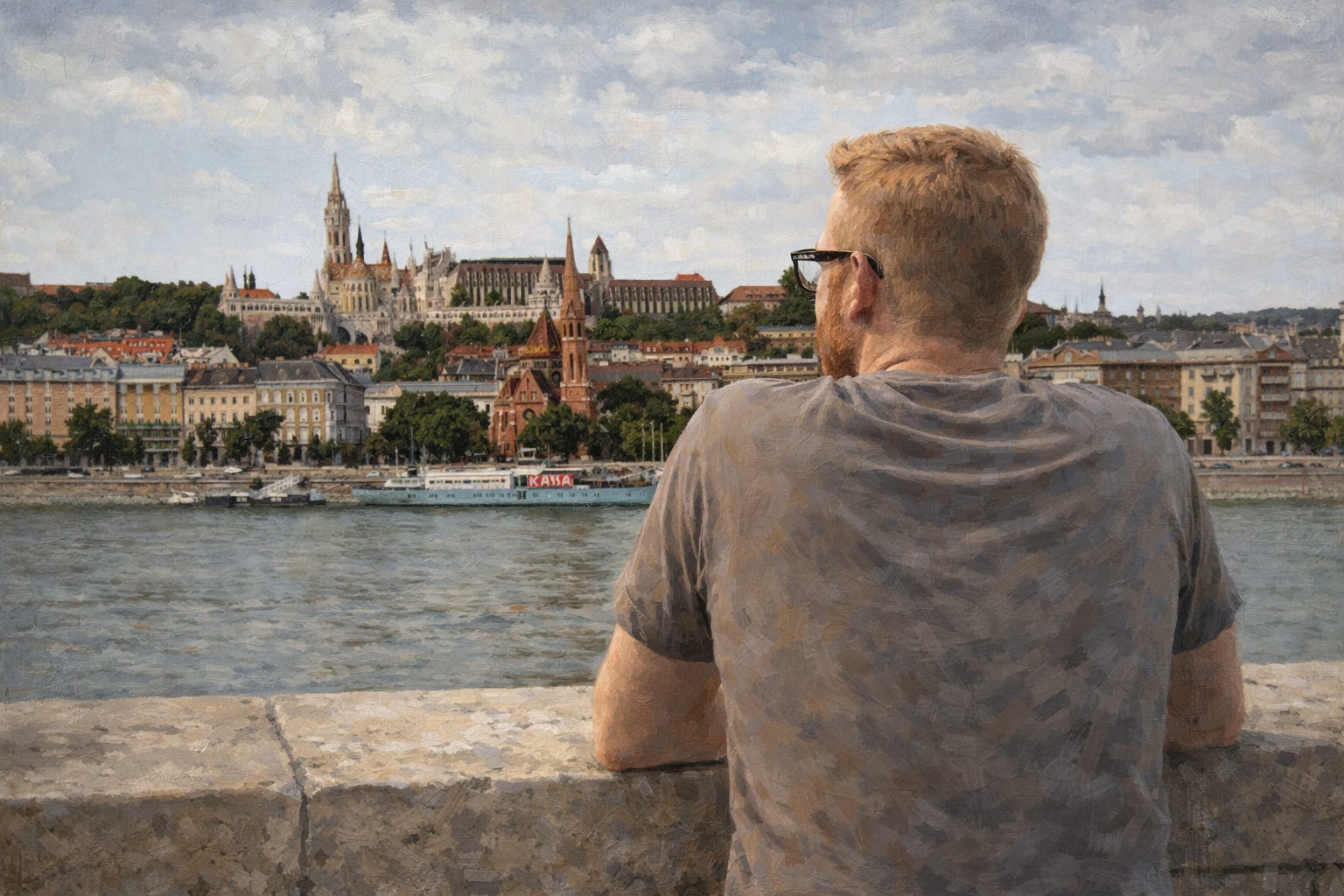
“I’ve been giving myself permission to…”
That’s an opening line that would puzzle most of the world. In Italy, you take a two hour lunch break and do whatever you want with it. And nobody asks. In Ireland, you sit in the pub on a Tuesday afternoon and no one documents it. In Vienna, you move at the pace the day asks for. Nobody’s underscoring anything. Nobody’s announcing it. You’re just… living.
Here, we name it. We build frameworks around it. We post about it and recommend books about it and build entire coaching practices on top of it. We turn the ordinary act of taking a day to yourself into a concept that requires granting. And somewhere in that underscoring, something gets lost. Or at least distorted.
I’ve been thinking about why that is.
America has a specific relationship with rest and need and self-regard. One that makes even ordinary acts of maintenance feel like they require justification. Taking a day away from client work when the road ahead is uncertain isn’t something you should have to earn. Taking a bed day when you need one isn’t a moral failing to overcome. Nourishing yourself, even when you don’t feel good in your body, is just a basic necessity. It’s the floor. But we’ve built a culture that frames these things as achievements, and then build industries and platforms and products and services and subscriptions to help us perform them.
Self-care. Boundaries. Permission. The vocabulary is everywhere, and the vocabulary is distinctly ours.
I don’t think the language is cynical, exactly. I think it emerged from something real: a genuine need to push back against a “hustle culture” that had made productivity the measure of a life. But somewhere along the way the announcement became the act. You post the walk, and something in your brain files it under done. You call it self-care, and the naming creates a distance from the thing itself. The permission is granted, loudly, and the rest somehow doesn’t quite happen.
I’ve watched people in other places rest without any of this apparatus. In Italy, the afternoon closes. Shops shut. The culture creates the condition and then simply inhabits it. No gratitude journaling required. In Ireland, slowness isn’t a practice. It’s just a pace. The pace, honestly. You don’t earn the pint. You don’t document the walk. You’re not being intentional. You’re just there.
I’ve spent enough time moving through those places that the contrast isn’t theoretical for me. I’ve felt the difference between rest that just happens and rest that you have to build a case for—to yourself, first, and then to everyone watching.
What I’ve been sitting with lately is the question of what the underscoring actually costs us.
My working theory is that it keeps the thing at arm’s length. As long as permission is a concept (something you give yourself, something you practice, something you’re working on) it stays located in the future. You’re always on the way to it. The goalposts remain out in front of you, which is, maybe not coincidentally, a very American place to keep the goalposts.
What if you just took the nap? What if you just stayed where you wanted to be, without framing it as something you’d finally allowed yourself? What if ordinary self-regard was just… ordinary? Not a practice. Not a journey. Not content.
I’m not sure we know how to do that here. I’m not sure I do. I grew up in this country, shaped by the same culture that made permission into a concept that needs granting, actively contributing to hustle culture through its climax, and that formation doesn’t just fall away because you’ve spent time somewhere slower. But I think naming the mechanism is at least a start; seeing it for what it is.
Most of the world doesn’t need to give itself permission.
It just lives.