


I’m rushing to the page with this one.
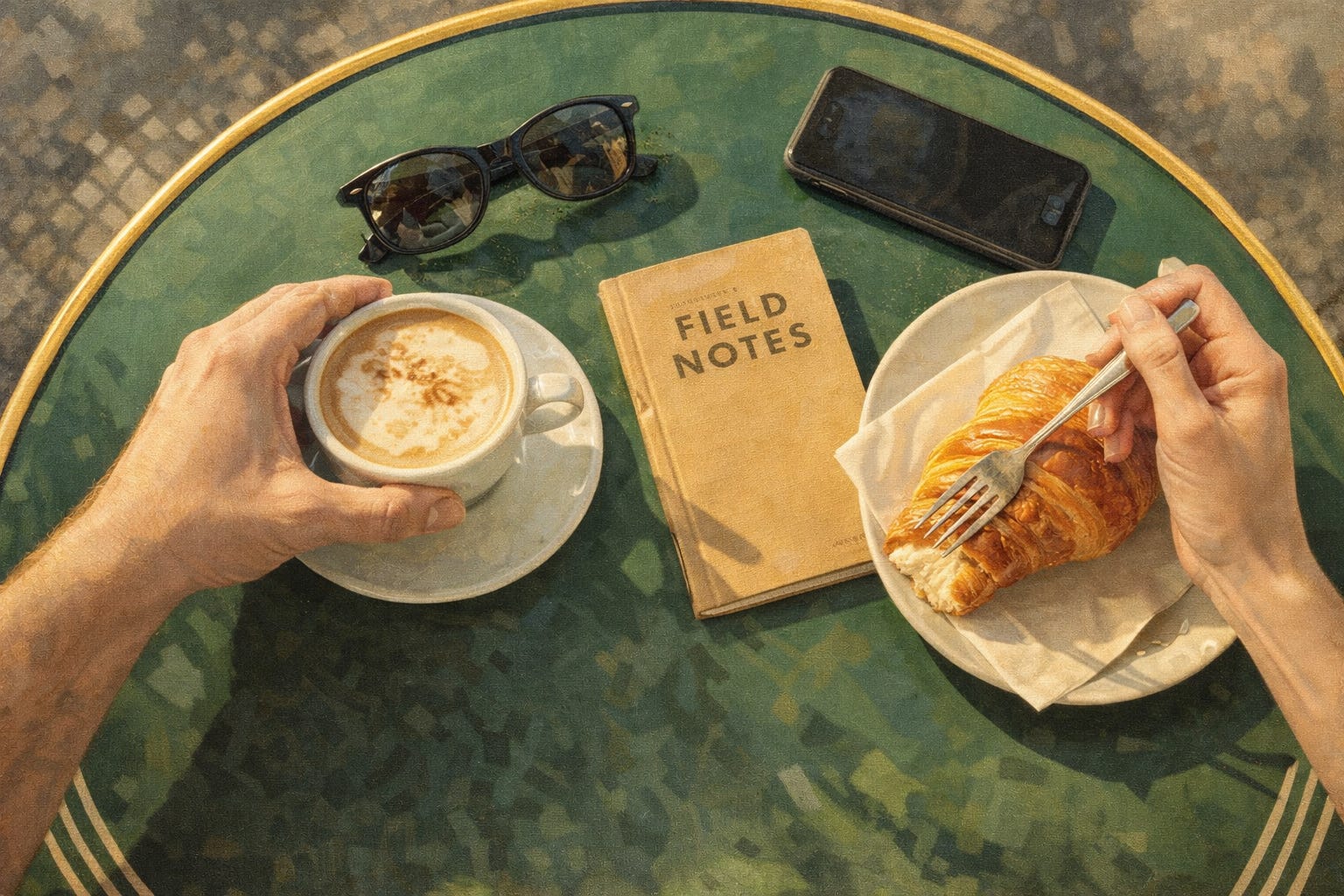
Yesterday, Anna, a new friend here in Austin, and I were sharing a coffee (and people-watching) in a neighborhood hotspot. “I love traveling,” she said. “I’m so much more intentional on vacation. Where I go. Who I’m with. I don’t even feel guilty if I don’t want to do what someone else wants to do or have a particular person with us.”
I giggled, and that giggle quickly turned to laughter with a quiet recognition.
“What?” she asked.
“That’s just my life,” I said.
She looked at me for a second. Then said something I’ve been sitting with since: “That’s probably why people love you. Because they know you’re doing exactly what you want, exactly how you want to do it.”
We stayed on the subject for the better part of an hour after that. She kept asking how I got this way. Like there was a practice, or a philosophy, or a book. I didn’t know how to tell her it was mostly wreckage.
What she probably meant as a compliment (and it was) points to something that took a long time to develop and cost more than I expected. I didn’t grow up feeling like my presence was wanted. As a kid, as a teenager, there was a persistent low hum of feeling like I was somewhere I wasn’t supposed to be. I don’t need to over-index on that here. But it’s worth naming, because it explains what came next.
As a young adult, I figured out a workaround. If I couldn’t simply belong, I would earn it. I treated people to meals. I went overboard on birthdays and holidays. I showed up for things I didn’t care about, just to keep certain people in my life. I compromised—chronically, quietly—and told myself it was generosity. I remember the specific feeling of that period. Pathetic is the right word. Not because generosity is pathetic. It isn’t. But I wasn’t being generous. I was paying a toll.
When she asked when it changed, I was honest with her. “I’m still a little performance-driven when I get an invitation,” I said. “What can I bring? What do you need? Almost always comes before the Yes.”
But the real turning point wasn’t a realization. It wasn’t therapy or travel or a particular moment of clarity. It was simpler and harder than that. I lost everything.
From 2012 to 2016, I lived in deep poverty, ultimately losing my apartment in 2014. What followed was a four-to-six year process of rebuilding. Financially. Psychologically. And something harder to name. Spiritually, maybe. Things that, at 24, you don’t even know need housekeeping let alone how to rebuild.
I want to be careful here. I’m not interested in packaging it into a lesson. But there’s something about that kind of loss. Something clarifying about it. Something that makes certain things undeniable. Nobody was going to fix it for me. That was obvious. But the more honest thing is this: I was never going to let them.
Some older, more stubborn version of myself had already decided that before rock bottom became a sort of home. The poverty didn’t produce my independence. It just removed everything I’d been using to avoid living by it.
The recovery was slow. Incremental. There’s no clean arc to report. But the more I reclaimed—stability, hope, something resembling the life I wanted—the more fiercely I wanted to protect it. Not out of fear. Out of respect. In the exact same way you save for months or years for a trip and then actually show up for it. You don’t let it slip by. You don’t give away days to things that don’t matter. You’ve worked too hard for that.
Anna had described traveling that way. Every choice deliberate. No guilt about wanting what she actually wants. By the end of our conversation, I think she understood that I just never came back from that mode. And it’s that foundation that supports where I am now, give or take a few pressure-testing guilt trips from family.
It’s not that I stopped caring what other people think, or that I’ve crossed some threshold into pure selfishness. I still want to bring something. I still ask what you need. Some wiring doesn’t fully rewrite. But when I accept an invitation now, I actually want to be there. When I spend time with someone, it’s because I chose them. When I book a trip, I book it the way I want it. The places. The pace. Who’s in the room.
She laughed when I explained it that way. “So you just applied vacation logic to your entire life.” “More or less.”