


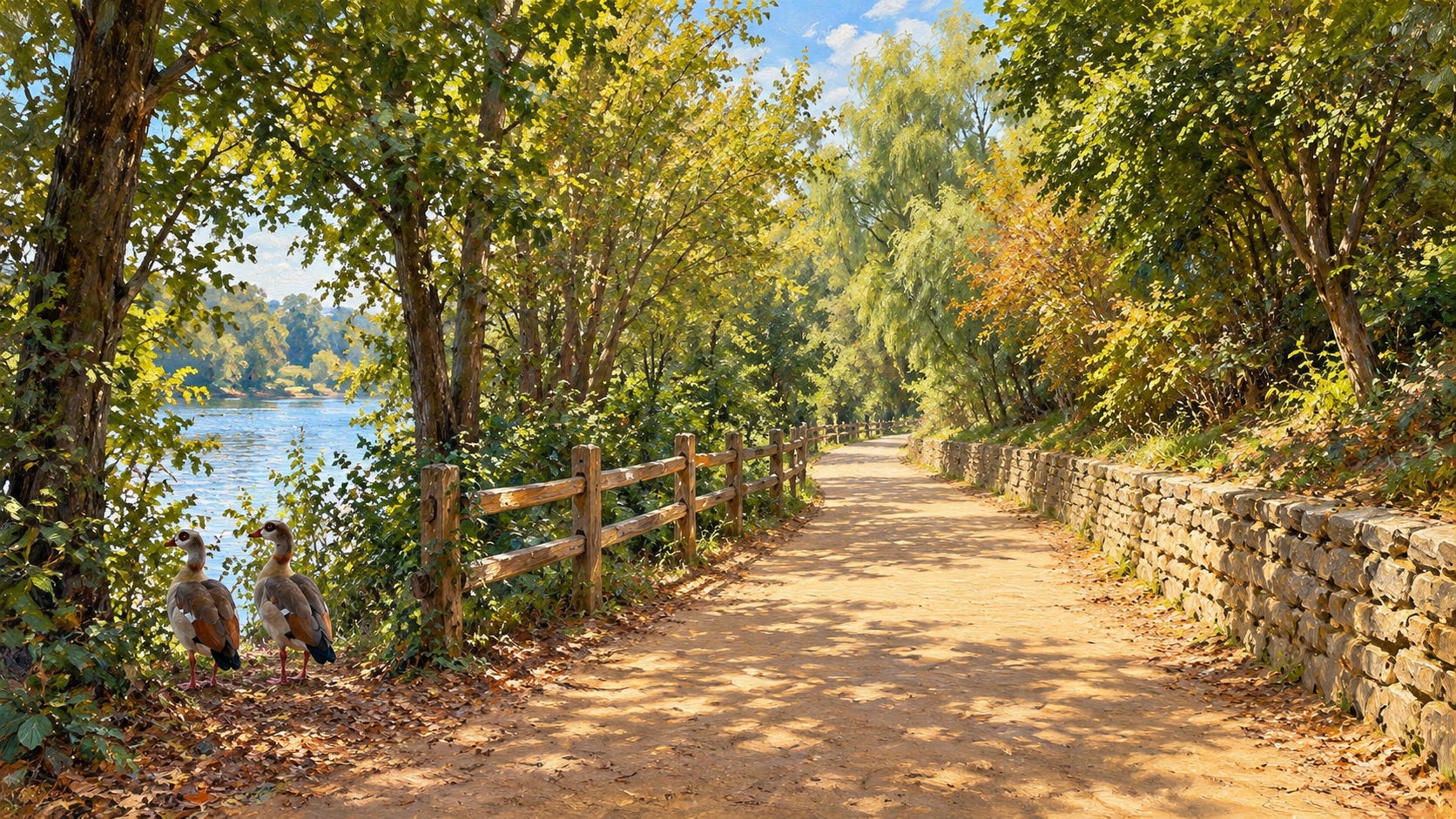
Two Fridays ago now, I found myself laughing at the sky at my own expense somewhere along the hiking trail. I was thinking about what I had written about faith a few weeks back and what is required to identify and accept whatever comes next in life. When I wrote that, I was reflecting on the importance of recognizing when a chapter of our lives has run its course and trusting the uncertainty that follows while remaining open to whatever is on the other side. I had written about all of that with a fair amount of conviction; only to arrive home and find that absolutely nothing was waiting for me.
I can’t ignore irony. I mean, there I was, a man who had spent unquantifiable time contemplating the importance of surrender, now standing in the middle of the Lady Bird Trail wondering why the next chapter hadn’t presented itself yet. When will the Universe start operating on my time? I had done the reflecting. I had made the difficult decisions. I traveled thousands of miles and returned to the place I had spent months longing for. Surely there was meant to be something on the other side of that. Some kind of movement, confirmation, or indication that I had made the right decisions or was headed in the right direction. Instead, I found myself with an unusually quiet calendar, a growing list of financial concerns, and too much time to contemplate both.
Maybe I was expecting some kind of a homecoming. Not a celebration, but something to bring me back to a place of familiarity so that I may find my footing again. I spent much of my summer abroad and it had been a season of considerable movement, physically and otherwise, and I was hopeful that reestablishing some consistency in my personal and professional life would force balance. I’d get back to my routines, return to the work that needed my attention, and trust that stability would create the conditions for opportunity to manifest.
It’s only been three weeks. And considering how long I had been away, how much has changed in my professional life, and how much of my attention has been occupied by simply getting home—one could reasonably argue that any real state of normalcy was only achieved a week or two ago. I know this. I would have no trouble offering someone else a generous helping of that reminder, grace, and reassurance in finding their own acceptance. But, applying the same perspective to my own circumstance has proven to be considerably more difficult.
Of course, part of that difficulty has been financial. My work is changing with the market in which I’ve spent much of my career. I’ve noticed an acceleration in the use of artificial intelligence and therefore expectations have evolved around the value and necessity of traditional creative services. And it’s made it difficult to attract and maintain the kinds of client relationships that once provided a relatively dependable foundation for my collaborative practice. Thankfully, less creative demand allows me to show up more as a co-founder and strategic thought partner and this has allowed breathing room for me to rethink (and reshape) what my work looks and feels like—and create room for other things that I am building. It’s a transition I believe in but belief doesn’t pay the bills and, to be honest, the weight of the uncertainty in the last several months has become more and more difficult to carry.
“I hope that traction would be regained with my homecoming,” I journaled a few days ago. I thought that I’d settle in, get organized, reconnect with people, and begin putting the pieces of my life back together in both familiar and sustainable ways. In my mind, whatever was next for me would almost certainly involve work; I’d finalize the firm’s new business model or a new project would bring the resources needed to move Hooch from the realm of imagination into something more tangible. I just wanted to see and feel and share evidence of progress or something I could point to and say, “There it is. That’s what all of this has been leading toward.” I had never considered that the next thing might not have anything to do with my professional ambitions at all. However, in retrospect, I should have definitely seen it coming.
In the middle of my European travels this past summer, I woke up every morning for two weeks with my eyes and throat nearly swollen shut and at one point counted over half a dozen cold sores across my lips. I could hardly recognize myself and simply knew I wasn’t well. By the time I reached Philadelphia in September, I was relying on daily doses of B12 just to get by. I had been running from exhaustion for a long time and it didn’t take the physical illness, emotional strain, and prolonged uncertainty I had been carrying too long to let it catch up to me. And still, I kept wondering what would happen next.
I don’t know if you’ve ever thought about it, but over the years I’ve noticed that everyone approaches exhaustion pretty differently. We’ve become pretty skilled at ignoring and even accommodating it without ever seriously considering the consequences. We adjust our expectations, rework our schedules, promise ourselves we’ll carve out a little more time for recovery, and hyper-fixate on whatever we need to get us through an afternoon. It’s almost as if we delusionally think the exhaustion itself might subside (not worsen) if we just keep going. We tell ourselves things will settle down after we wrap the current project, reach the next milestone, or get home after the trip. Why does it feel like rest is always something waiting for us on the other side of accomplishment—rather than a necessity for continuing to live well?
I’ve been at it for years. I’m excellent at simultaneously identifying my limits and pushing myself to make it just a little bit farther. In my mind, there’s always another conversation worth having or opportunity worth exploring or idea that might lead somewhere. And the best (or worst) part of it is, because I attribute much of my professional success to curiosity, relationships, and creative exploration, I can justify every single bit of it as a worthwhile investment in the future.
I suspect I would have spent much of the past month attending conferences in Dallas, exhibitions I find interesting, or chasing new people that feel worth connecting with. If my financial circumstances were different. I would have found new places to go, new rooms to enter, and new professional opportunities to pursue, filling the calendar and convincing myself I was doing everything necessary to move my life forward. Maybe some of it would have been useful or even produced exactly the opportunities and relationships I needed. But I suspect I would have exhausted myself further by mistaking familiarity of being busy with the satisfaction of meaningful progress.
However, necessity imposed a different set of conditions. The growing weight of my financial obligations has meant there has been no room for unnecessary travel or speculative professional commitments and I’ve grown incapable of approaching certain aspects of my professional life without the enthusiasm they once inspired. I have had to think more critically about the opportunities in front of me and intentionally reconsider where I’m directing my limited resources to maintain specificity on what the coming weeks and months need to look like. Nobody wishes for this level of uncertainty and I certainly have no interest in romanticizing financial hardship in any way, but I can’t ignore the agency that this season has forced of me. I’ve had to choose myself and exercise agency in ways I may not have otherwise been able to do.
I’ve had to stay home a lot and home has been a remarkably quiet place. I’ve made it out to the trail most days. And I’ve found tremendous peace and pleasure walking beneath the trees, reacquainting myself with the landscape and community of “regulars” that cross my path. (You really do see the same faces out here every single day.) I’ve taken care of the ordinary business of getting settled and found my way back to routine. And, somehow, although I’m weary to admit it in writing, I’ve found comfort in letting afternoons pass without having much to show for them. All of that to say, there have been real moments of genuine contentment in all of this—although often interrupted by the uncomfortable feeling that I ought to be doing something more productive.
Still, I’ve noticed some part of me remaining occupied with the work I wasn’t doing. In other words, the calendar was quiet but my mind hadn’t necessarily followed its lead.
There’s an important distinction to be made between having the time and feeling permitted to rest. They are not the same thing. We can clear our schedules, close our laptops, go for a walk, or spend an entire afternoon doing as little as we desire—all while carrying the belief that our attention belongs somewhere else. I know better than most that the mind can be composing the next email while be body is still; I’ve spent enough of my lifetime in motion to recognize and accept that slowing down doesn’t necessarily guarantee I’ve stopped demanding movement from myself.
Which brings me back to the realization on the trail, that this probably should have occurred much (much) sooner. I was walking along a part of the familiar paths this morning when an old mantra came to mind. “Do nothing,” I thought to myself, “If you don’t know what to do—do nothing.” Oprah taught me this and I’ve carried this with me for years and I’ve put it to use so many times (and for so long) that I sometimes forget I’m practicing it at all.
I always appreciate the simplest advice. I’ve found that there’s more wisdom in resisting the urge to manufacture an answer when faced with uncertainty. It feels better than forcing a decision for the sake of feeling productive. I have learned to leave some questions alone and to give both cause and effect room to breathe. If nothing else, we can all always trust that a little distance will always help distinguish what genuinely needs our attention from what demands it. The practice has served me well. Especially in times when my instinct has been to respond to uncertainty by taking action.
Somewhere along the way, I seem to have developed an expectation about what the act of doing nothing is intended to accomplish. (I know. It sounds crazy.) I had always understood it as a strategic move to arrive at the next right thing. To stop. To wait. And to allow the noise to settle so that eventually the right next move would present itself and I would know the precise next step to take. But that means, even in the stillness, I am anticipating movement. The pause is valuable because of what might come after.
Then, right there on the path, somewhere between one step and the next, I realized I felt the flood of irony from misunderstanding the assignment entirely. Rest was what was next. Rest was the next move.
I hate that feeling. The chill that moves through me when I realize I’ve been circling something for a little too long. I looked up through the twisted trees along the river and let the laugh escape from my belly. You’ve got to acknowledge wonder, no matter how ridiculous it is. I had spent the better part of the last month searching for the apparent meaning in the absence of progress, wondering what I was supposed to be doing with myself. Only to discover that I had been doing what I’ve needed to be doing all along. The next chapter was already underway.
The laughter didn’t last very long. I felt the self-awareness immediately met with a wave of shame and regret. Ireland and Philadelphia came to mind and I thought about how poorly I had been feeling and all of the evidence I had overlooked along the way. Why hadn’t I recognized the need for rest sooner? Why was I so resistant to accepting the quiet of those last few weeks for what it was? And why spend so much time interpreting an opportunity to recover as evidence that I was somehow falling behind?
It took another moment for me to find and appreciate the irony in that response, too. I’d finally recognized that I needed to rest and my immediate instinct was to criticize myself for not having done a better job of it. Somehow a moment of clarity became an opportunity to evaluate my performance.
I suspect I am not alone in this. Our culture has become increasingly comfortable talking about the value rest has on our lives, so long as we can explain what it will help us accomplish. Most people rest so that they can perform better or take time off solely to refresh. We sleep so that we can concentrate; meditate to make better decisions; or schedule periods of recovery so we can return to our responsibilities with more energy. If you think about it, even the language we use to encourage slowing down more often than not presents rest as an investment in future productivity. It becomes another tool for making ourselves more capable, more efficient, and better at meeting the future demands of our lives.
I don’t think there’s anything inherently wrong with recognizing those benefits. Rest improves our capacity to work, think, create, and participate meaningfully in the world at large. But, I wonder what happens when we only justify rest through its usefulness that we lose sight of the value on its own. What happens when we’re tired but can’t identify a sufficiently productive reason to stop?
I wonder what happens when life itself creates an unexpected pause and, rather than welcoming the opportunity to recover, we become preoccupied with everything we ought to be accomplishing? I wonder how often we actually turn rest into another responsibility, something to make the most of, or something to optimize. It gets interesting when we begin to measure the quality of our downtime by anything other than whether we’re feeling sufficiently restored. We wonder whether or not we used those hours wisely and approach stillness with the same expectations we bring to our work. And then we wonder why we have such a hard time sleeping.
The more I think about it, the more I wonder whether my struggle over the last few weeks hasn’t been about an inability to rest. I’ve been resting and spending more time outdoors. What I’ve struggled with is accepting that it’s enough. To think I’ve been measuring these last few weeks against expectations that had very little to do with what I actually needed. Or that interpreting the absence of visible progress was evidence that something was wrong.
Although I suspect the two can feel remarkably similar when we’re used to measuring our lives by how far we’ve come, there’s a difference between being blocked and being stuck. Both might look like inactivity from the outside. Both might involve some form of discomfort, uncertainty, and risk in the absence of an obvious next step. The thing to keep in mind is that one suggests something has gone wrong whereas the other leaves room for the possibility that we just need to remain where we are for a while.
I’ve been thinking about that as it relates to faith, too. When I wrote about identifying and accepting what’s next several weeks ago, I was thinking largely about the courage required to recognize when life was asking me to move into a new direction. That meant considering the relationships and arrangements, places, and expectations that we sometimes outgrow. And the trust required to leave them behind without knowing what will come to replace them. I think what I hadn’t fully appreciated at the time was how much my understanding of faith remained tied to an expectation of forward momentum. In other words, I was willing to surrender my attachment and welcome a new outcome, but I still expected a productive outcome so that I could recognize it when it arrived.
And therefore, perhaps my understanding of acceptance has been incomplete. I tend to imagine the next chapter of life at any time as an invitation to become something more. I lean toward new opportunities, deeper relationships, different places to live, or even some long-awaited manifestation of the person I’ve been working toward becoming.
Even when we don’t know what the future holds, we often assume that its arrival will bring some recognizable development. We think life will change when something new begins, something old changes, or something within or around us finally makes sense. We rarely stop to consider that the next chapter might require less from us - less searching, strategizing, or proving ourselves - rather than more.
I’ve come to believe that accepting what’s next requires hanging up the expectation of progress altogether, at least as we’ve come to define it. I think it asks us to consider that a period of apparent inactivity might not be a problem awaiting a solution; that the value of an experience isn’t always determined by what it creates. Sometimes there is no lesson for us to master or opportunity we need to pursue or even a better version of ourselves waiting at the end of a period of hardship. Sometimes we’re just tired and the most appropriate response is to acknowledge it, feel it, and process it.
I think back to the man walking along the Lady Bird trail a few weeks back, laughing at the apparent absurdity of having written so confidently about accepting what’s next while feeling completely lost. Looking for some indication that life was moving forward, evidence that all difficult decisions and unfamiliar transitions of the preceding months were leading somewhere worthwhile.
I wish I could go back and tell him that an answer was already taking shape. But I know he would have gone in search of it immediately; trying to identify it, understand it, and figure out what he was supposed to do with it.
Instead, I’d probably just tell him to enjoy his walk. There’s time enough to figure out what comes next. I’m learning that I don’t need to turn every quiet moment into preparation for something else. Work will be there tomorrow. And so will the questions. Today, there are the trees overhead and the water to the left, gravel beneath my feet, and the uncommon pleasure of having nowhere in particular to be. And, I can’t believe it, that’s enough.